
Insomnia Tips: How to Calm Your Mind and Sleep Better Tonight
- Sleeping Pills
 Written by Dr. Glenn Murray, MD
- Medically reviewed by Ryancooperr09
1. Introduction
It’s late at night, your body is tired, you have set an alarm for morning chores, and now you know it’s time to sleep. You can’t, sometimes for a reason, and sometimes you even don’t know why you just can not sleep. In such critical conditions, you should really know some of the best Insomnia tips.
Yes, the state of being unable to sleep at all is known as Insomnia, where you keep replaying your former day, or worrying about things that you just can’t fix, or just playing some of the already happened conversations in your mind while trying to sleep. And if you’re going through such a stage, then you simply are not alone.
There are many people throughout the globe suffering from this medical condition and are finding proper solutions for the same. And for that reason, we are gonna help with some of the best tips that can help with Insomnia Tips.
2. Why Is It So Hard to Fall Asleep When You’re Tired?
There can be stress, coffee, or simply some pressure to fall asleep, which can make you feel helpless. So, first we have to find out that particular reason and select the best approach to overcome it.
Because you can have stress at work, and the reason behind that could be that you may have drunk coffee quite late in the afternoon, or may have taken a nap or so. Sometimes it may be just because of some endless scrolling on the phone, or sometimes there can’t be any obvious reason at all.
When sleep becomes difficult, it is easy to start watching the clock and calculating how many hours you have left before morning. That creates another worry: What if I’m exhausted tomorrow?
Unfortunately, trying harder to sleep can worsen your desire to sleep and may leave you more frustrated. So instead of treating your sleep as something you just have to have right away, what you should do is to put more focus on ensuring your surrounding more comfortable to sleep.
3. How to Calm Your Mind Before Sleep
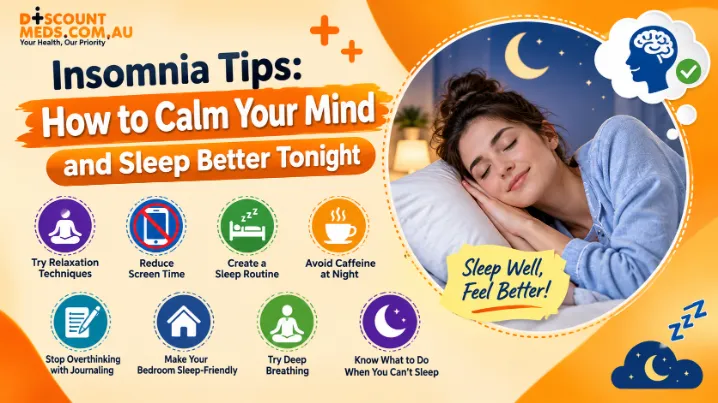
It’s not something big about controlling each and every thought for falling asleep; rather, it’s about stopping engaging with them. A fine, slow breathing exercise here could be helpful, where you can wind down a little bit and just feel calmer; you can just write tomorrow’s tasks on paper. You can try these simple techniques for sleeping;
1. Give your worries somewhere to go
You can keep a notebook near your bed, and for writing your worries, or things on top of your mind, you can use it.
Write whatever thoughts are holding you back from sleeping. It can be some unfinished tasks, a crucial thing you are planning to do tomorrow, or simply an awkward conversation. Moreover, with each task or thing, make sure to add the next step you are gonna do about it.
For example:
- Call the clinic tomorrow.
- Reply to that email after breakfast.
- Review the budget during lunch.
2. Try gentle, slow breathing
And for gentle and slow breathing, you don’t need to learn a complex breathing exercise or an app. You can just sit comfortably, put down your shoulders, make yourself comfortable, and just breathe.
However, if a persistent focus on breathing is making you uncomfortable, then you can divert your mind and feel the softness of the mattress against your feet or as such.
3. Stop trying to solve tomorrow tonight
Some problems genuinely need attention. Bedtime, however, is rarely the best time to solve them.
When a thought appears, acknowledge it without starting a long internal conversation. You might tell yourself, “I can think about this tomorrow.” Then gently return your attention to something quiet and familiar.
Your mind may wander again. That is normal. You do not need to get the technique perfect for it to be useful.
4. What Should You Do When You Can’t Sleep at Night?
Lying in bed and staring at the roof won’t help you; on the contrary, it can make you feel frustrated. So just get out of bed, do something quiet in low light, such as reading a few pages, and return to bed when you feel sleepy again.
So, no frustrations at all, and while you’re up, please avoid checking your phone for messages or scrolling through social media. Bright screens are not good for your sleep.
However, if somehow you still are awake, then you can repeat the process, as it’s very helpful.
5. What Is a Good Bedtime Routine for Insomnia?
A good bedtime routine for insomnia is much simpler than you think; you can repeat it every now and then. So, what you have to do is spend the final half an hour to 60 minutes before going to bed slowing down, and just leave tomorrow’s work for tomorrow only. For better understanding, let us share a fine schedule for your adaptation;
- 60 minutes before bed: Wrap up the day: You can complete your work where possible, and prepare for things you need for the upcoming day, and then you can write them down.
- 30 minutes before bed: Choose something quiet: Take a shower, read some books, and listen to something soothing you like.
- At bedtime: Let sleep come naturally: Keep your room dark, quiet, and comfortable. Settle into bed when you feel sleepy rather than treating a particular bedtime as a deadline for falling asleep.
- Do not worry if your routine takes a little trial and error: A complicated routine can become another thing to manage, so start with two or three habits you can comfortably maintain.
6. What Are the Best Natural Ways to Sleep Better?
The most natural ways to sleep better at night are to have sorted habits in your day-to-day life, and not just some random supplements or drinks. But what are those daily habits? They can include a regular wake-up time, getting more than enough daylight during the day, no late caffeine, and keeping your bedroom much more comfortable for a good night’s sleep.
But one has to be free from pressure to ensure all of these, because we can’t have it all in a single day, and these habits can take time. So, let us list further details; you can act better when it comes to ensuring sorted sleep-friendly habits in your lives.
6.1 Keep your wake-up time consistent.
You should try to wake up at the same time, even on weekends, because that would help you understand the daily time for sleeping and waking up. And when you have a poor night’s sleep [as it can happen], you shouldn’t try to compensate by sleeping late in the morning, because it would disturb your next sleep cycle, and the pattern of disturbance may continue.
6.2 Get some daylight during the day.
Going outdoors and spending time in the sunlight is highly crucial because that is how our body understands [this is daytime, I should be awake]. You can go on a morning walk, or do some regular activities out in the sun, so your body can understand the basic sleep-wake rhythm. And you can be comfortable with time, but don’t perform vigorous activities near nighttime.
6.3 Watch your caffeine intake.
When we say caffeine, we talk about cola, coffee, tea, the chocolate you eat, and even those energy drinks of yours, which you consider your favorite. You should keep your caffeine intake in mind, as it really affects your sleep-wake cycle, so try not to have it after noon.
6.4 Be careful with alcohol.
Alcohol can make you feel sleepy at first, so you might think it really is sleep-friendly, but honestly it’s not. Rather, it’s just the opposite of sleep-friendly; it can really disrupt your sleep later at night, so please try to avoid it.
6.5 Make your bedroom comfortable.
When we say to keep your bedroom more comfortable, it doesn’t mean that you have to ensure some luxury in it. Rather, you should keep it aligned with natural light during the day and comfy and dark at night; you can keep it quiet, with a cozy temperature, and bedding that suits you.
If you’re not comfortable with the noise, you can use earplugs or keep some cozy background sound near you. But it shouldn’t be your phone, as you may end up watching notifications or doomscrolling while being awake.
7. Does Your Phone Make It Harder to Sleep?
Using a phone in bed makes the brain think it’s daytime and that there’s no time to sleep, so it continues to work. So, what you can do is complete all phone-related chores in the evening and ensure a phone-free period before bedtime.
We understand that it can be difficult at times; try to use these small changes:
- Set a time when you will stop checking your messages, even those related to work.
- Keep it charging if necessary, but as far away from your bed as possible.
- You can turn off all the idle notifications throughout the night.
- Or you can just do some other activity before going to bed, such as reading or listening to a calm audio.
Please keep one thing in mind: we are making you feel guilty about using the screen, but we are helping you develop sleep-friendly habits at night.
8. Can Food and Drinks Help You Sleep Better Tonight?
You may or may not have read something related to “Food that helps you sleep better at night” or “Sleep-friendly drinks” on social media, but there aren’t any such specifics. But what you can do with food and drinks is to limit drinks such as caffeine and alcohol to none for better sleep, and try to avoid large meals at night.
This may help you ensure a fine, comfy sleep at night, though if hunger wakes you at night, try to have some small snacks, something suitable for your regular diet, so you can go back to bed without any trouble.
9. How Can You Fall Asleep Fast Without Forcing It?
There are no guaranteed tricks that can help you sleep like a log, so instead of finding easy solutions, we should work on a fine, regular sleep-comfy schedule. A fixed schedule where you can relax your body and stop stressing about checking whether it’s working or not.
Here, let us explain some helpful short body-relaxation exercises;
- Get comfortable and allow your shoulders to soften.
- Notice your feet and let them rest without deliberately tensing them.
- Slowly move your attention up through your legs, hands, arms, and face.
- Relax any muscles you notice holding tension.
- When thoughts interrupt, gently return your attention to the part of your body you were noticing.
However, you don’t need to finish each and every one of these exercises if you’re already feeling sleepy.
10. When Is Insomnia a Sign That You Need Help?
Sleepless nights now and then are okay, but if you’re facing such troubles more often or, in some cases, on a regular basis, you may feel exhausted. At such difficult times, please don’t wait to see a professional healthcare expert, who can check and assess this medical condition and advise you on proper treatment accordingly.
Consider making an appointment if:
- Sleep problems continue for several weeks or keep returning.
- Tiredness affects your concentration, mood, work, or daily activities.
- You regularly wake up gasping, choking, or with a feeling that your breathing has stopped.
- You experience persistent pain, anxiety, or low mood that interferes with sleep.
- You rely on alcohol or medicines to get through the night.
Insomnia can persist due to various factors such as stress, mental health concerns, medical conditions, medication effects, or another sleep disorder. So, to deal with it, you should reach out to your doctor and ask for needed solutions.
For ongoing insomnia, cognitive behavioural therapy for insomnia (CBT-I) is an established treatment that addresses the thoughts and behaviours that interfere with sleep. It is different from simply receiving general sleep advice and can be delivered in different formats.
You can read more through “Healthdirect Australia’s guide to insomnia“.
11. Are Sleeping Pills the Right Answer for Insomnia?
You may have read about Discount meds Australia, the website, or similar kinds of platforms, where you can order prescription sleeping pills. And there are many such medications that help in sustaining a healthy sleep-wake cycle, such as;
- Zopidaily 7.5
- Zopicon 7.5mg
- Zopimini 3.75
- Hypnite 2mg
- Zopising 7.5mg, and more.
But the real question that people frequently ask is how to fall asleep fast, and do medications really help with that? It varies from person to person, because if some doctors have prescribed such pills to someone, after assessing their medical condition, then it may help. But they are not the permanent solution.
They can help for a shorter period of time, but they also come with potential risks; hence, only healthcare professionals can advise a person to take them or to avoid them. Rather, in general, you can follow tips for better sleep mentioned above and try to ensure a fine and comfy sleep routine for a better night’s sleep.
12. Final Thoughts: Start With One Small Change Tonight
First of all, remember one thing: you don’t need to change your life overnight, but you should take small steps. Leave your phone, write down your tasks, give yourself some time to unwind, and if still unable to sleep, then also don’t stress out. Do some soothing activities you like, and return when you feel sleepy again.
There can be one difficult night, and it’s not about you failing to sleep, because it can happen once or twice. But if the condition persists every now and then, please seek professional medical assistance.
Medical disclaimer: Through this content, we are providing basic yet crucial information, but please don’t take it as medical advice, because only a registered medical professional can do that. Speak with your doctor if the problem is persisting, and follow their guidance.